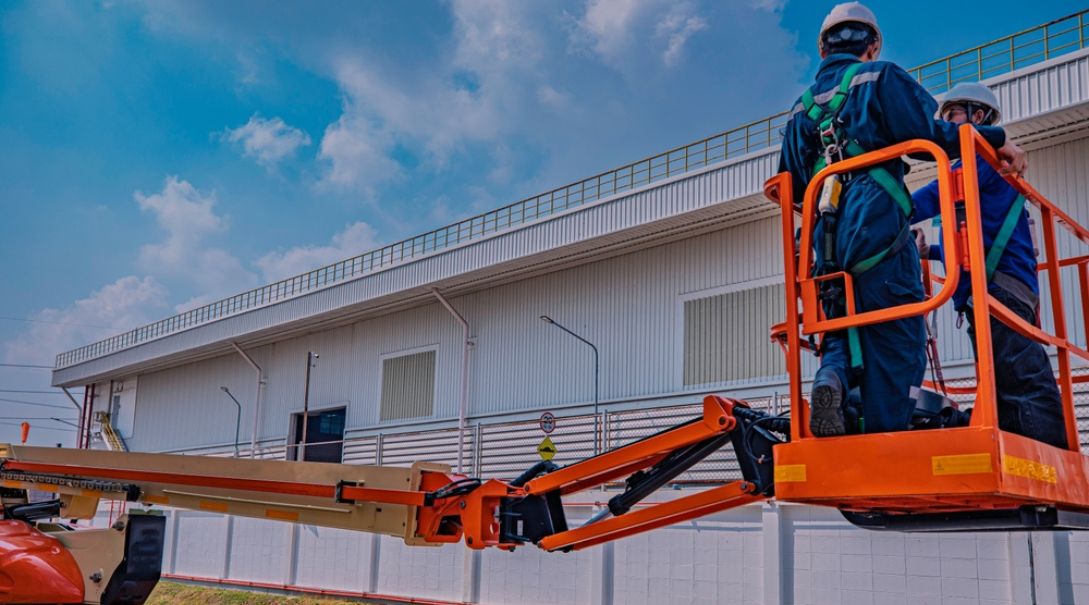
Aerial lifts are essential tools in construction, maintenance, and industrial environments. From accessing elevated work areas to performing high-level repairs, these machines make challenging tasks more efficient and accessible. However, without proper training, they can also present serious safety risks.
Every year, preventable aerial lift accidents occur due to inadequate operator training, lack of hazard awareness, or poor maintenance. OSHA (Occupational Safety and Health Administration) enforces strict standards for aerial lift operation to reduce workplace injuries and fatalities.
This article explores the aerial lift training requirements every employer and operator must know and how AOTC’s professional safety programs ensure your team remains compliant, confident, and safe.
Table of Contents
Understanding OSHA’s Aerial Lift Standards
OSHA’s aerial lift regulations are outlined under 29 CFR 1926.453 for construction and 29 CFR 1910.67 for general industry. These standards define:
- Who must be trained: Every operator who uses an aerial lift must receive formal instruction and practical evaluation.
- When retraining is needed: If an operator demonstrates unsafe operation or changes to the work environment occur.
- What topics training must cover: From safe operation techniques to recognizing potential hazards and performing inspections.
Failing to meet OSHA’s aerial lift training requirements can result in citations, costly fines, and increased safety risks.
Key Components of Aerial Lift Training
Effective aerial lift training programs, such as those provided by AOTC, are designed to meet and exceed OSHA standards. Let’s break down the main components that make up a compliant and comprehensive training course.
Classroom Instruction (Theoretical Training)
This foundational portion covers the theoretical knowledge operators must master before operating an aerial lift. Topics typically include:
- OSHA regulations and ANSI standards
- Types of aerial lifts (boom lifts, scissor lifts, etc.)
- Equipment capabilities and limitations
- Safe operating procedures and hazard recognition
- Fall protection systems and PPE (Personal Protective Equipment)
- Emergency procedures and rescue planning
Classroom instruction ensures every operator understands not just how to operate safely, but why certain procedures are in place.
Hands-On Training (Practical Application)
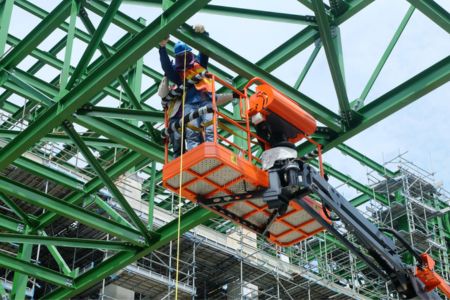 After completing classroom learning, operators participate in supervised, hands-on practice. This includes:
- Conducting pre-operation inspections
- Maneuvering the lift safely in various environments
- Identifying and avoiding hazards such as overhead power lines
- Operating the lift at different elevations
- Using controls smoothly and responsibly
A certified trainer evaluates each operator’s ability to handle the lift safely and effectively.
Operator Evaluation & Certification
To demonstrate competency, operators must undergo a formal evaluation by a qualified instructor. Upon successful completion, the operator receives certification documentation, which includes:
- Operator’s name
- Date of training and evaluation
- Name of trainer and evaluator
- Type of aerial lift covered
This certification must be retained by the employer as proof of compliance. AOTC provides detailed records for every trainee, ensuring your business remains audit-ready.
Refresher Training and Recertification
Aerial lift operator training isn’t a one-time event. According to OSHA, retraining or recertification is required when:
- An operator is observed operating unsafely
- Involvement in an accident or near-miss occurs
- New aerial lift equipment or jobsite hazards are introduced
- Three years have passed since the previous certification
AOTC’s refresher courses are specifically designed to update operators on new standards, technologies, and best practices, ensuring ongoing safety and compliance.
Common Aerial Lift Hazards and How to Prevent Them
Even experienced operators can encounter hazards. A comprehensive training program prepares them to recognize and mitigate these risks effectively.
|
Hazard Type |
Example |
Prevention Strategy |
| Tip-overs | Operating on uneven surfaces | Inspect terrain and use outriggers or stabilizers |
| Falls | Standing on guardrails | Always wear and secure a full-body harness |
| Electrocution | Contact with overhead power lines | Maintain a minimum 10-ft clearance |
| Equipment failure | Hydraulic leaks, broken controls | Conduct pre-use inspections and report defects |
| Collision | Limited visibility | Use spotters and maintain clear communication |
Through proactive training and awareness, these incidents can be avoided entirely.
Employer Responsibilities Under OSHA
Employers play a crucial role in maintaining aerial lift safety. OSHA requires employers to:
- Provide approved aerial lift training by qualified instructors
- Maintain up-to-date certification records
- Ensure lifts are inspected and serviced regularly
- Enforce proper use of PPE and fall protection equipment
- Investigate and document any incidents or unsafe operations
AOTC helps employers stay compliant by offering turnkey training programs that meet all OSHA and ANSI requirements while aligning with your site-specific needs.
Benefits of Partnering with AOTC for Aerial Lift Training
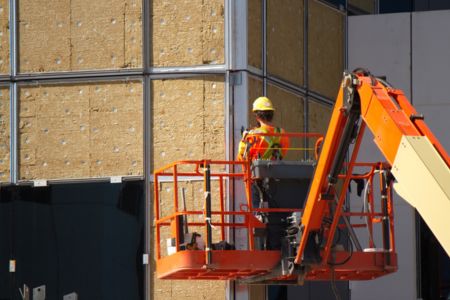 Choosing AOTC means partnering with experts who understand the balance between regulatory compliance and practical field operations.
Here’s what sets AOTC apart:
- Certified Trainers: All courses are led by OSHA-authorized instructors with hands-on industry experience.
- Customized Curriculum: Training tailored to your equipment, site conditions, and operational needs.
- On-Site and Online Options: Flexible learning that fits your schedule.
- Comprehensive Documentation: Full compliance records and certificates are provided after each course.
- Commitment to Safety: AOTC prioritizes proactive prevention, not just regulatory fulfillment.
With AOTC, your workforce gains both the confidence and competence to operate aerial lifts safely and efficiently.
Take the Next Step Toward Safety & Compliance
Partner with AOTC today to schedule comprehensive aerial lift training for your team. Contact us to learn more about our safety training programs or to speak directly with a compliance specialist.