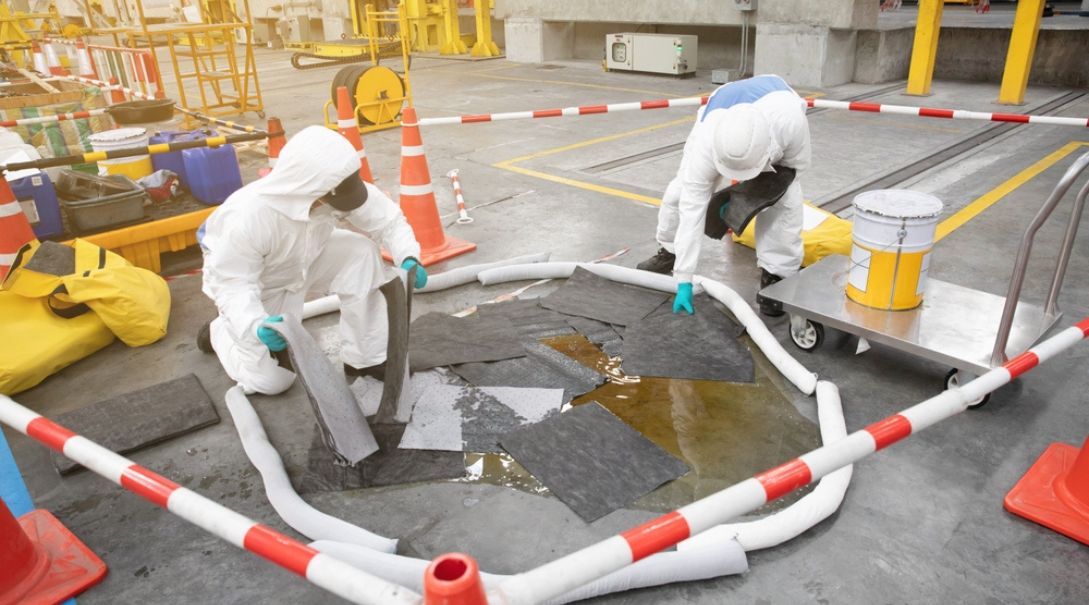
The last thing you’d want to have happen on your business property is a chemical spill that potentially does harm to the environment around you and the health of people in the immediate vicinity, including employees and customers. There’s also the risk of a catastrophe, like a fire or explosion, that threatens people’s safety and could result in massive damage to your property. If you run a business, you need to have a plan in place for what to do if there’s a chemical spill on your property.
Spill readiness matters, which is why you need a professional spill response team you can trust in the event of a chemical spill. Alpha-Omega Training and Compliance, Inc. is trusted for expert chemical spill response in Florida. We know how to respond to chemical spills for a variety of industries, including construction, aeronautical, military, and more.
In this post, we discuss the fundamentals of chemical spill cleanup and why AOTC is the professional spill response team to trust to clean up spills in workplaces across Florida.
Table of Contents
The Basics: What Happens When a Chemical Spill Occurs
A chemical spill is a dangerous situation because it results in the release of hazardous substances. These substances can not only be harmful to humans who come in contact with them, but they can also create trouble for your property, such as fires or explosions.
Chemical spills pose immediate threats to people and the environment around them. Their toxic fumes can make people fall ill, and the chemicals can cause skin burns. Immediate action needs to be taken to respond to a chemical spill.
A trusted chemical spill cleanup crew needs to know how to stop the spread of liquid and how to neutralize the harm done from a chemical spill. A fast, correct response is important to safely clean the spill and secure the property.
The 3 C’s of Spill Response
The standard, widely cited steps of a chemical spill response are known as the 3 C’s. These steps provide an important framework to follow when it comes to cleaning and managing a chemical spill in order to protect the health of individuals on your property, as well as the environment around you. The 3 C’s of spill response are as follows:
- Control – This is the step that addresses the source of the spill and begins the process of stopping the spill.
- Contain – This step focuses on stopping the spread of the spill. That means keeping the spill in one spot, so it doesn’t continue to spread any further.
- Clean Up – This is where any remaining evidence of a spill is addressed as liquid is cleaned up and waste is disposed of safely.
Why Spill Response Looks Different By Industry
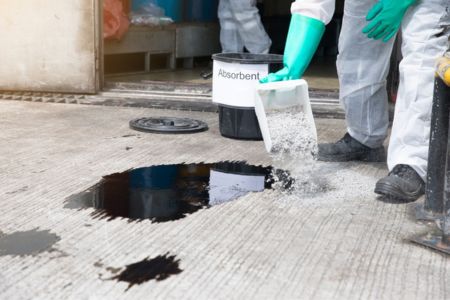
There are different considerations that need to be made when addressing spill response for different industries. Not all spill cleanups will be the same. Certain industries will be handling different types of chemicals and liquids at different volumes. There are also unique environmental considerations to think about for different industries, as well as regulations to follow.
Here are examples of different spill risks and responses across AOTC’s focus industries.
- General Industry – The guidelines for general industry spill response focus mostly on keeping workers safe and preventing additional harm to the environment. Typical containment and control procedures will be followed to stop the source of the spill and prevent spreading. Once the spill is absorbed, it can be disposed of safely, and the surfaces it touched should be thoroughly decontaminated.
- Construction – Construction site spill response has to focus on the specific hazardous materials used at construction sites, such as diesel fuel, liquid concrete, sealants and adhesives, and paint. If spilled, these materials could all cause unique and dangerous problems.
- Aeronautical – A chemical spill at an aeronautical site, such as an airport tarmac or runway, could cause a major catastrophe with deadly consequences. The important thing to remember with an aeronautical spill is that you will likely be dealing with jet fuel, which is highly flammable. Take extra precaution to address fire and explosion hazards while containing the spread of liquid so it doesn’t reach storm drains or any aircraft that might be on the tarmac.
- Military Defense – Chemical spill response at a military base or some other military site can be complicated for a number of different reasons. For one, military operations involve the use of many hazardous materials, such as petroleum, jet fuel, lubricants, and more. The other complicating issue is that military defense cleanup response has to follow a specific command and coordination structure based on military protocols. A command system needs to be set up and coordinated from the top down.
- Power Generation – A chemical spill at a power plant is a major issue as there are not only hazardous materials to consider, but also the possibility of an environmental disaster as well as the potential of a wide-ranging power outage. The focus of a power generation spill has to be on containing the specific liquids and fuels that are used in transformers, which have the potential to be quite dangerous to individuals and the environment.
- Theme Parks – If you’re running a theme park, the last thing you want to have happen is something that threatens the safety and experience of your park’s guests. Any spill needs to be immediately cordoned off so that park guests don’t come in contact with hazardous materials.
- Municipalities – A chemical spill involving municipal property runs the risk of harmful materials making their way into municipal water systems. Spill response needs to be coordinated at the municipal level to protect public health.
When to Call a Professional Spill Response Team
When a spill is either too big to contain on your own or too dangerous to trust to just anyone to clean up, you need to call a professional spill response team. Keep an eye out for signs that an incident exceeds in-house capacity, such as a large spill, presence of hazardous chemicals, lack of trained personnel, or lack of familiarity with cleanup regulations.
An emergency spill response company is the better option to handle spills where these signs are present. AOTC is a professional spill response team for Florida residents, offering 24-hour emergency spill response support. Give us a call to clean up a chemical spill in your Florida workplace.
Why Businesses Choose AOTC for Chemical Spill Response
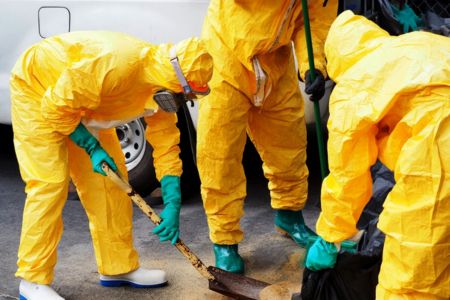
AOTC has established itself as a knowledgeable and reliable choice for environmental solutions in the state of Florida, including chemical spill response. We employ a qualified team of experts who provide proven results for companies of different sizes all over the state of Florida in both the public and private sectors.
Our business is Florida-based with multiple locations all over the Sunshine State, including Titusville, Jacksonville, Tampa, and Newberry. As an employee-owned company, you can count on us to take pride in the quality of our work, providing honest and dedicated service to fully meet the needs of our clients. We will address your problem with HAZWOPER-trained crews, rapid-deployment micro-ER units, and years of direct experience across many different industries. We provide a more localized and responsive alternative to the large, national spill response providers.
Need spill response support? AOTC is ready to help you. We’re here to answer your call for chemical spill cleanup in Florida. Contact us today for 24-hour emergency spill response.