
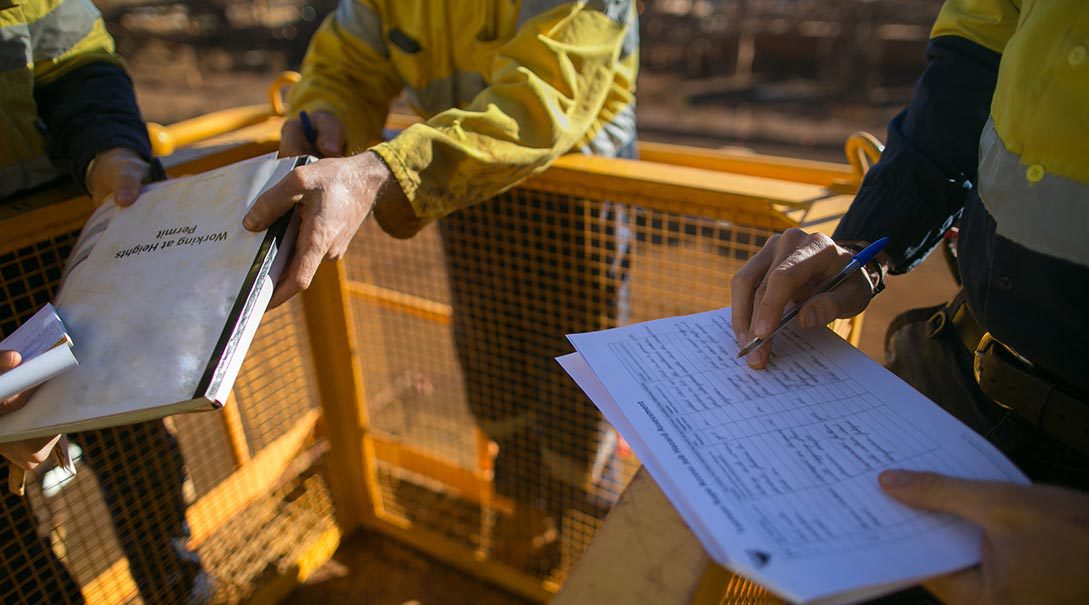
To what extent are your employees at risk when they are working for you? How might you be able to mitigate that risk? Through a health and safety assessment, backed up with strong safety and compliance training, you can safeguard your team while maintaining Occupational Safety and Health Administration (OSHA) compliance. These efforts will also protect your organization legally and financially.
A health and safety assessment involves procedures to both identify and analyze risks — reducing the chances of bodily harm, productivity decline, property damage, regulatory fines, and liability. Your objective with the assessments you perform is to reveal the following:
- What can occur
- The likelihood that it will occur
- The consequences if it does occur.
Table of Contents
6 Steps of A Health and Safety Assessment
This core component of workplace safety and OSHA compliance training can be expressed, in brief, as a series of six steps:
Step 1 – Compile information on hazards
 Externally, you can get information from OSHA, the Centers for Disease Control and Prevention (CDC), and the National Institute for Occupational Safety and Health (NIOSH). You can also utilize the expertise of occupational health and safety training companies for more straightforward explanations and tailored guidance.
Internally, you can utilize elements such as the following:
- Current health and safety programs
- Equipment manuals
- Chemical manufacturer safety data sheets (SDSs)
- Workers’ compensation reports
- Illness and injury patterns
- Incident investigation reports
- Minutes from health and safety committee meetings
- Surveys of your team
- Job safety analysis
- Industrial hygiene assessments
- Inspection reports are conducted internally and by third parties.
Step 2 – Perform a safety hazard inspection
 Inspect your facilities, equipment, and operations comprehensively. The basic guidelines for this step are the following:
- Ensure that all activities and areas are inspected, including vehicles.
- Use a checklist to ensure you do not miss anything.
- Coordinate your efforts with employees, ensuring they have appropriate safety and compliance training to identify and correct easily fixable hazards on-the-fly.
- Document hazards and verify their correction. Visual aids can enhance ongoing discussion and training, so take videos or photos of improvements.
- Consider hazards and speak with workers prior to introducing changes (such as to equipment, workflow, or operations).
Step 3 – Conduct a health hazard identification
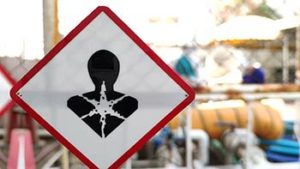 The trickier part of the health and safety assessment is the health portion since risks may not be immediately noticeable or even visible to the naked eye. Here are the elements of this step:
- Check for physical hazards, including instances of high heat, elevated noise, and radiation exposure.
- Inspect the workplace for poisonous plants, molds, sources of infectious disease, and other biological hazards.
- Check for chemicals in use that are volatile or have low exposure limits. Consider the potential for skin exposure and ventilation issues.
- Review repetitive motion, heavy lifting, and other ergonomic risk factors.
- Use direct reading instruments, air sampling, or other methods to perform quantitative exposure assessments.
- Evaluate medical records for possible health issues resulting from on-the-job exposure.
Step 4 – Create plans to investigate incidents
 Your response plan should include names/titles of responsible parties, reporting forms, anything you will need (such as supplies), and appropriate communication channels. Proceed as follows:
- Ensure your workplace safety and OSHA compliance training cover these investigations.
- Include both workers and management in your investigation team.
- Determine root causes.
- Investigate “near-misses.”
- To avoid recurrence, let everyone know the investigation’s findings.
Note that you only have 24 hours to report major work-related injuries to OSHA — including inpatient hospitalization, loss of an eye, or amputation. Fatalities must be reported within 8 hours.
Step 5 – Consider non-routine scenarios and emergencies
 A health and safety assessment must review every scenario, including non-routine situations and emergencies. Identify any tasks or scenarios in this category, paying special attention to related locations, equipment, and materials.
This step should consider the following:
- Disease outbreaks
- Violence
- Medical emergencies
- Natural disasters and weather emergencies
- Collapse of buildings or other structures
- Startups following equipment shutdowns
- Material spills
- Explosions and fires
- Chemical releases
- Infrequent maintenance and other non-routine activities.
Step 6 – Assess the hazards you have identified, prioritize them, and determine interim measures for their control
 Understand the hazards your assessment has revealed. Consider incidents that could occur due to worker exposure to each.
- Assess hazards in terms of the likelihood of incidents occurring, how many employees could be involved, and how severe the results might be.
- Address the most serious hazards first by listing them in order of priority.
- While permanent fixes are developed, implement interim controls.
Robust & Effective Health and Safety Assessment
Your team can be invaluable with this effort since no one wants to become ill or injured. A critical piece of this project is compliance and safety training. At AOTC, we offer trusted compliance training programs designed to meet your company’s needs. Contact us today to build and schedule customized training for your team.